Nastaliq's history
The Nastaliq script is the second special script of Iranians, which appeared after the suspension script in the late 8th and early 9th centuries of the Hijri, that is, during the Timurid era. The invention of Nastaliq calligraphy has been attributed to Mir Ali Tabrizi (died 850 AH). In the old calligraphy treatises, a story is told that Mir Ali saw the flight of wild geese in his dream and inspired the fluid movements of Nastaliq from the smooth movements of the bodies of these birds during flight. Mir Ali Tabrizi lived at the beginning of the 9th century of Hijri at the same time as Timur Gorkani. Although there are early examples of Nastaliq before him, the role of Mir Ali Tabrizi in the compilation of Nastaliq was so important and fundamental that later masters have named him as the inventor.
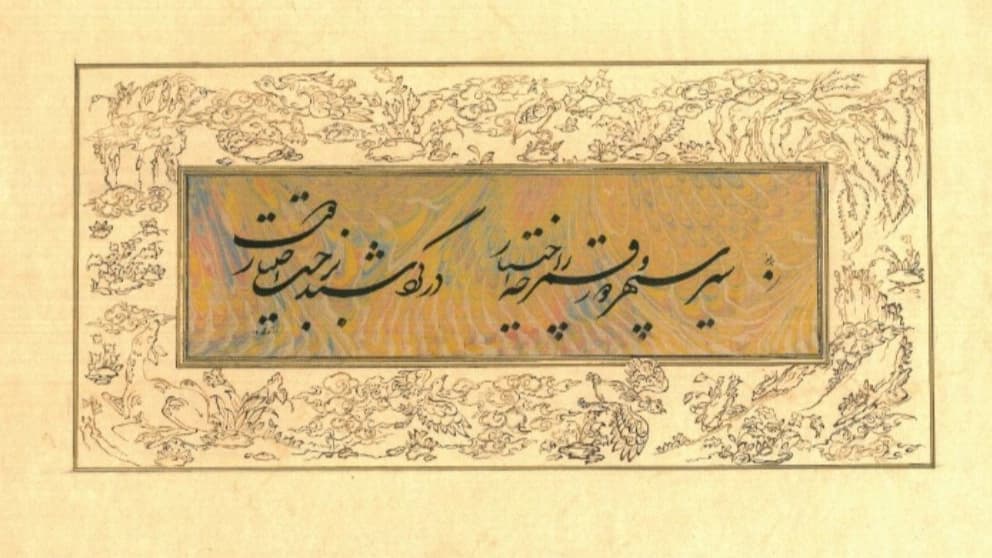
After the introduction of Nastaliq script, almost most Persian books were written with it. Nastaliq quickly went up the stairs and became very popular. In 833, by the order of Prince Baysanqar Mirza, who was a famous calligrapher himself, Baysanqari Shahnameh was written in the script of Nastaliq Jafar Tabrizi, which is now available in the former royal library in Golestan Palace Museum (sh. 4752). With this work, Nastaliq was introduced as an official line in the line of six lines. In the early centuries of Nastaliq script, two different styles appeared in different parts of Iran; One was the style of Jafar Tabrizi and Azhar Tabrizi, which was later perfected by Sultan Ali of Mashhad and became common in Khorasan and its surroundings. The other is the style of Abdul Rahman Khwarazmi, the court calligrapher of Sultan Yaqoob Aq Qoyunlu (H: 884-894 AH), which was popularized in the western and southern parts of Iran, and later his children, Abdul Rahim and Abdul Karim, and their followers, popularized it.
Calligraphers believe that since the beginning of Nastaliq calligraphy for a century and a half, the shining star of Nastaliq calligraphy was Mir Ali Heravi; But in the second half of the 10th century AD, another artist brought Nastaliq to the peak of evolution and beauty. "Emad al-Hasani Qazvini" (961-1024 A.H.) known as "Mir Emad" was a powerful calligrapher who overshadowed the works of his predecessors, even Mir Ali Heravi. Mir Emad lived in the 11th century and during the Safavid era. With his initiative and creativity and the high skill he acquired in Nastaliq, he had a style and school that calligraphers followed his style many years after him. This practice has been followed for nearly 400 years and continues more or less. After Mir Emad Nastaliq, he gradually opened his lofty position in the calligraphy of the world.
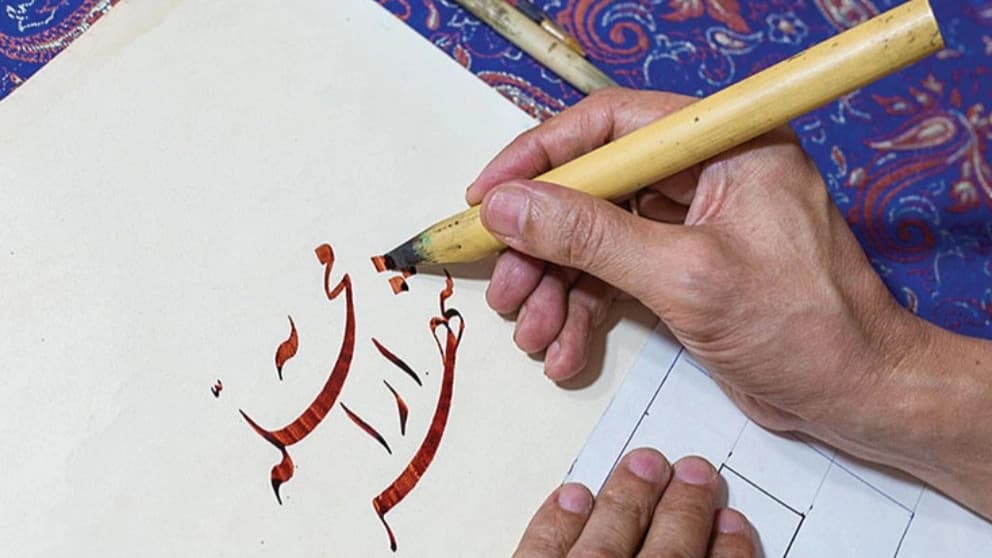
Many artists left Iran and Herat region in 1506 after the end of Timurid rule due to the political changes and went to India. Also, after the murder of Mir Emad by the order of Shah Abbas, many calligraphers went from the Safavid court to the Indian or Ottoman Gurkan court and spread the Nastaliq calligraphy in those lands and from there it found its way in many Islamic countries. Especially in the Indian subcontinent, Nastaliq became the favorite script of the Gurkans of India, and noteworthy works were created in that land in Nastaliq script. In Iran, after a relative stagnation, which occurred due to the decline of the Safavid government, in the early Qajar period, Nastaliq was again performed with full power and beauty, and lasting works were created in this field and great artists emerged. Then, in the 13th century, a new style and method emerged in Nastaliq. This work was done by an artist named "Mohammed Reza Kalhor". During the time of Kalhor, the printing industry was brought to Iran by stone printing method. The fineness of letters was an obstacle for Nastaliq lithography, and this caused Kalhor to create a new method for Nastaliq with changes in the style and method of Mir Emad, which is suitable for the printing industry.
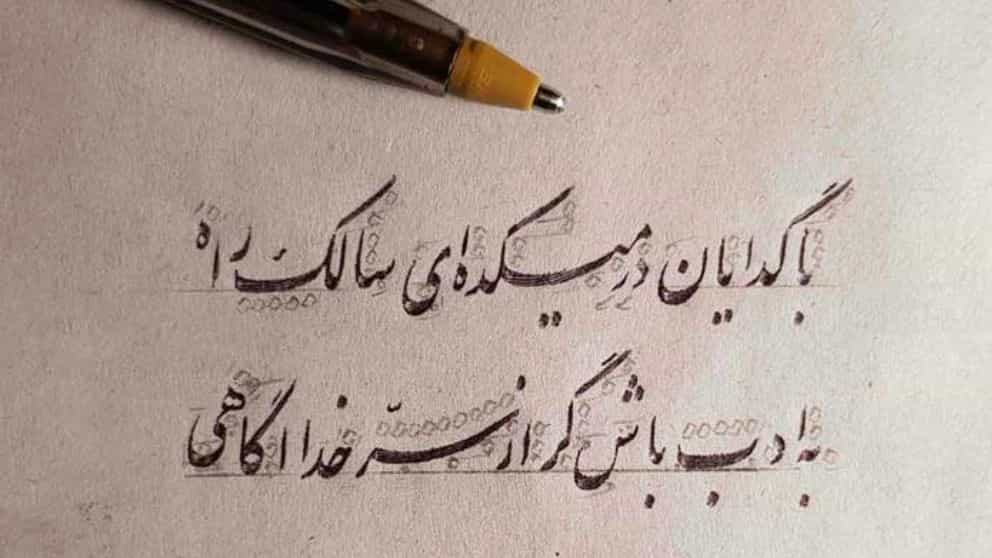
At the end of the Safavid period, by breaking the letters and stenography of the Nastaliq script, a method known as broken script became popular in Iran, which is an independent script and is considered the third Iranian script, and calligraphers have created original works in this field as well. Today, although the use of Nastaliq calligraphy has been limited with the development of the printing industry, many Iranian calligraphers have been able to create remarkable works of art in this way. Hundreds and even thousands of calligraphy exhibitions have been held in Iran or other countries over the past years, and valuable books and albums have been published in this regard. It can be said that such different pieces of art have never been written in the history, especially in large dimensions and with gel pen. In recent decades, some artists have combined Nastaliq calligraphy with painting methods and created a kind of artistic field called calligraphy. In short, the Nastaliq script was gradually formed from the 4th to the 8th century, especially in Greater Khorasan and Azerbaijan. In the 8th century in Herat, it found its true form and became official, and became a line comparable to the old six lines. In such a way that since then most Persian books and materials and perhaps all non-religious texts were written in this script. Then it developed in Central Asia and Greater Khorasan (Bukhara, Mashhad and Herat) and then it reached its peak of glory and beauty in Qazvin and Isfahan in the eleventh century.
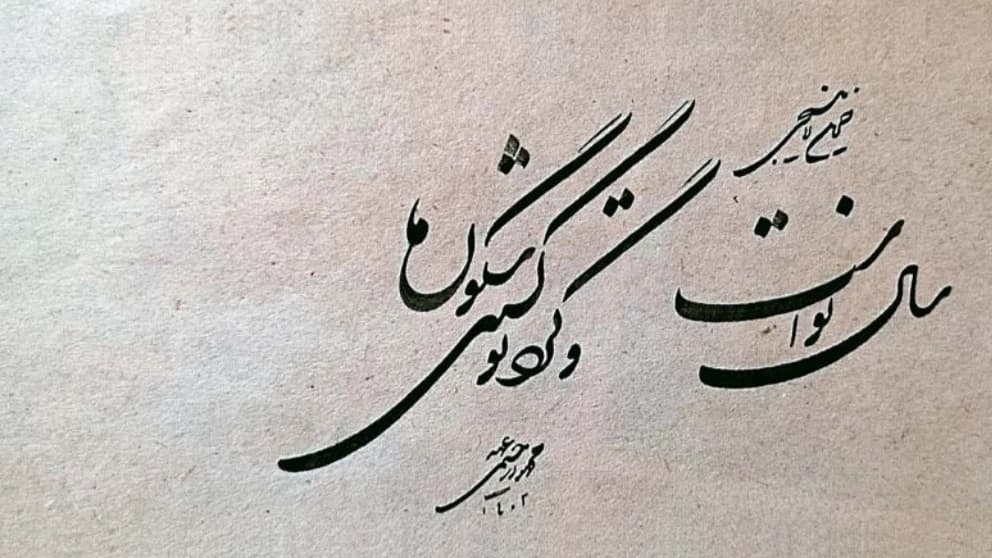
Then, for a while, he became the residence of Maskan and Mawai of the Ottoman Empire. After that, it continued to live and grow again in Shiraz and Tehran. Nastaliq is the national line of Iranians and the essence of the aesthetics of these people, and it is known everywhere as a symbol of Iranian art. It is also popular and pleasant in all ethnic groups and nations that have been or are under the influence of Iranian culture for a while and have made a living from this cultural field. . Although the best examples of Nastaliq were produced in Herat, Mashhad, Qazvin and Isfahan, we also have brilliant works from Cairo and Istanbul to Delhi and Hyderabad.